Letting Kids Learn
The Power of Discovery
As a parent, teacher, or supervisor, it’s easy to fall into the trap of believing that we must actively teach children everything they need to know.
However, I’ve come to a profound realization: perhaps we don’t need to ‘show’ them or ‘teach’ them anything at all. Instead, kids have an innate ability to learn by themselves, exploring and discovering the world around them in ways that are often far more meaningful than anything we could impart.
This leads me to question the very foundations of our educational philosophies. Why do we, as adults, feel the need to guide children to specific points of interest? Why do we assume that learning must be a structured process? The truth is, children are naturally curious beings. If they are given the freedom to explore their environment, they will find their own interests—and they will learn, or not, based on those experiences.
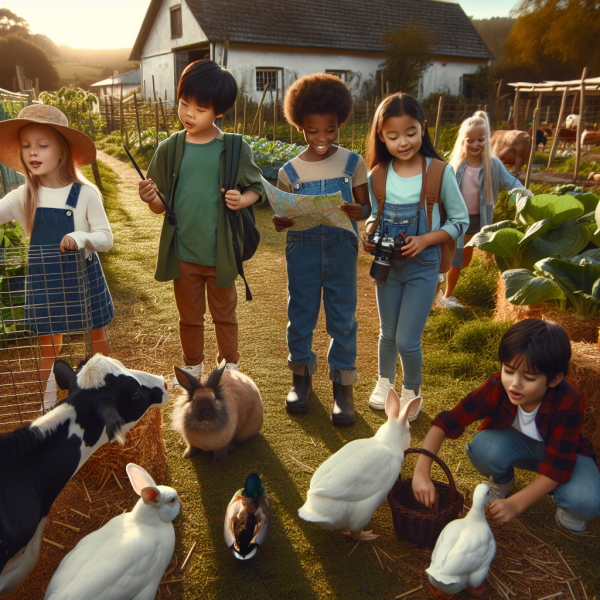
At our farm, we have created three rooms filled with books, all displayed with their covers facing outward. This simple design invites children to browse and choose what catches their eye. In addition, we have a room dedicated to toys and, of course, the vast expanse of the farm itself, brimming with opportunities for discovery.
What I’ve observed is nothing short of magical. After spending a couple of months playing freely on the farm, with no guidance of parents or supervisors, children will occasionally wander into one of the book rooms and pick up a book that piques their interest. They may not know what it is about, but their instinct to explore drives them to study it, to figure it out, and to engage with it deeply. Most importantly, we do not interrupt this moment; we allow their curiosity to flourish organically.
In their daily lives, children encounter a myriad of stimuli—sounds, sights, textures, and ideas. These experiences shape their interests and motivations. When they come across something that resonates with them, they dive in, driven by their innate curiosity. This is how learning occurs, and in my opinion, it is the only right way to learn.
The key takeaway here is to present points of interest without the pressure to guide them. Let them find their way. By stepping back and allowing children to lead their own learning journeys, we enable them to develop critical thinking skills, creativity, and a genuine love for discovery.
So, let’s embrace the idea that learning doesn’t always need to be a structured endeavor. Trust in the process, and witness the incredible ways in which children can learn and grow when we give them the space to explore on their own terms. After all, the world is their classroom—let them be the explorers.
Author: Jurgen Epple, Editor: AI, Johannesburg, 11 September 2024